

Why Barry Diller’s $18 Billion MGM Resorts Bid Could Signal a Major Shift From Traditional Real Estate to Experience-Based Assets
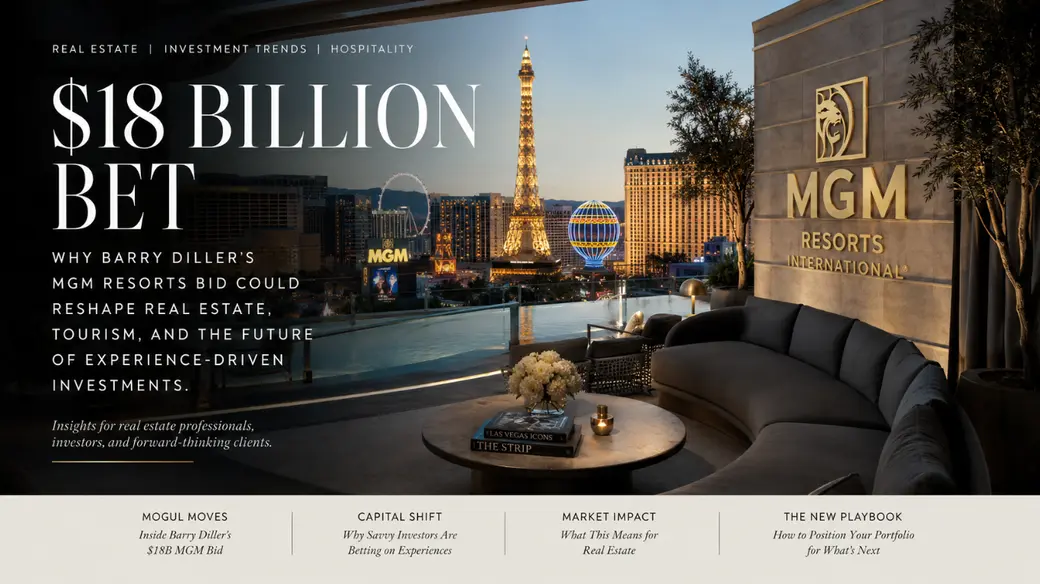
Why Barry Diller's $18 Billion MGM Resorts Bid Could Signal a Major Shift From Traditional Real Estate to Experience-Based Assets
As a real estate broker with more than 12 years of experience helping buyers, sellers, landlords, and investors navigate changing markets, I pay close attention to where institutional money is flowing.
This week, one of the biggest stories in business and real estate isn't about office buildings, apartment complexes, or industrial warehouses. It's about billionaire media mogul Barry Diller making an offer to acquire MGM Resorts International in a deal valued at more than $18 billion. Diller's company already owns approximately 26% of MGM and is offering $48.30 per share to acquire the remaining ownership.
For real estate professionals and investors, the bigger question isn't whether the deal closes.
The bigger question is:
Why are some of the world's wealthiest investors increasingly targeting resorts, casinos, hospitality, and entertainment assets instead of traditional commercial real estate?
The Rise of "Experience Real Estate"
For decades, institutional investors chased office towers, shopping centers, multifamily apartments, and industrial warehouses.
Today, many of those sectors face new challenges:
- Remote work reducing office demand
- E-commerce reshaping retail
- Higher interest rates compressing returns
- Construction costs remaining elevated
- Insurance costs increasing nationwide
Meanwhile, people continue spending money on experiences.
Travel, entertainment, sports betting, hospitality, concerts, sporting events, and destination tourism have become major drivers of consumer spending.
MGM owns some of the most recognizable hospitality assets in the world, including a significant portion of the Las Vegas Strip, along with gaming operations, hotels, entertainment venues, and the growing BetMGM digital betting platform.
Diller himself described MGM as a business with valuable physical assets combined with strong digital growth opportunities.
That combination is becoming increasingly attractive to investors.
What Makes Resorts and Casinos So Attractive?
Many investors are realizing that casinos aren't simply casinos anymore.
Modern resorts operate as:
- Hotels
- Restaurants
- Retail centers
- Entertainment venues
- Convention centers
- Sports betting platforms
- Luxury residential developments
In other words, they generate revenue from multiple sources.
A traditional office building collects rent.
A resort collects revenue from dozens of different channels.
This diversification can make hospitality assets more resilient during economic cycles.
Is Money Leaving Commercial Real Estate?
Not exactly.
But capital is becoming more selective.
Instead of asking:
"How many square feet does this property have?"
Investors are increasingly asking:
"How many experiences can this property create?"
We're seeing this trend nationwide:
Mixed-Use Developments
Projects that combine housing, dining, entertainment, and retail continue attracting investment.
Sports and Entertainment Districts
Areas surrounding stadiums and arenas are becoming major development targets.
Destination Communities
Walkable neighborhoods with restaurants, nightlife, and amenities often outperform purely residential communities.
Tourism-Based Assets
Hotels, resorts, and short-term-rental-friendly destinations continue drawing investor attention.
What This Means for Homeowners
For homeowners, this trend highlights something important.
The value of real estate increasingly depends on what's happening around it.
Properties located near:
- Entertainment districts
- Tourist attractions
- Sports venues
- Waterfront developments
- Lifestyle destinations
often benefit from increased demand and appreciation over time.
This is one reason we've seen continued interest in areas like Long Beach, Inglewood, and other Southern California communities that are investing heavily in lifestyle amenities and destination-driven development.
People don't just buy homes anymore.
They buy access to experiences.
What This Means for Real Estate Investors
If you're an investor, this deal reinforces a trend I've been watching for several years.
The most successful investments often sit at the intersection of:
- Real estate
- Entertainment
- Tourism
- Technology
Think about it:
- Hotels have become lifestyle brands.
- Apartments are adding resort-style amenities.
- Shopping centers are adding food halls and entertainment.
- Sports betting has become integrated with hospitality.
The future may belong to properties that create destinations rather than simply provide space.
The Bigger Trend Nobody Is Talking About
One comment from Diller stood out.
He described MGM's physical assets as something that cannot easily be replaced or disrupted.
That's a powerful statement.
In a world where so much business happens online, unique physical destinations may become even more valuable.
You can stream a movie.
You can order products online.
But you can't digitally replace a luxury resort, a world-class casino, a waterfront destination, or a thriving entertainment district.
That's why many sophisticated investors continue allocating capital toward real-world assets that create memorable experiences.
My Take as a Real Estate Broker
I don't believe investors are abandoning residential or commercial real estate.
I believe they're becoming more strategic.
The winners over the next decade may be properties and communities that combine:
- Housing
- Hospitality
- Entertainment
- Walkability
- Tourism
- Lifestyle amenities
Barry Diller's MGM Resorts bid isn't just a casino story.
It's a signal that some of the world's largest investors are betting on experience-driven real estate and destination assets as the next chapter of property investment.
For homeowners, investors, and real estate professionals, that's a trend worth watching very closely.
Stay Ahead of the Market
Want more insights on the trends shaping real estate, development, investing, and lifestyle across South Los Angeles County and Long Beach?
Subscribe to my newsletter and get weekly updates on market trends, local developments, hidden opportunities, community news, and the stories that could impact your property's value.
Categories
Recent Posts




GET MORE INFORMATION