
- Register
- Sign In
Retro Row Is Quietly Becoming Long Beach’s Coolest Lifestyle District
by Maiyah Jimenez
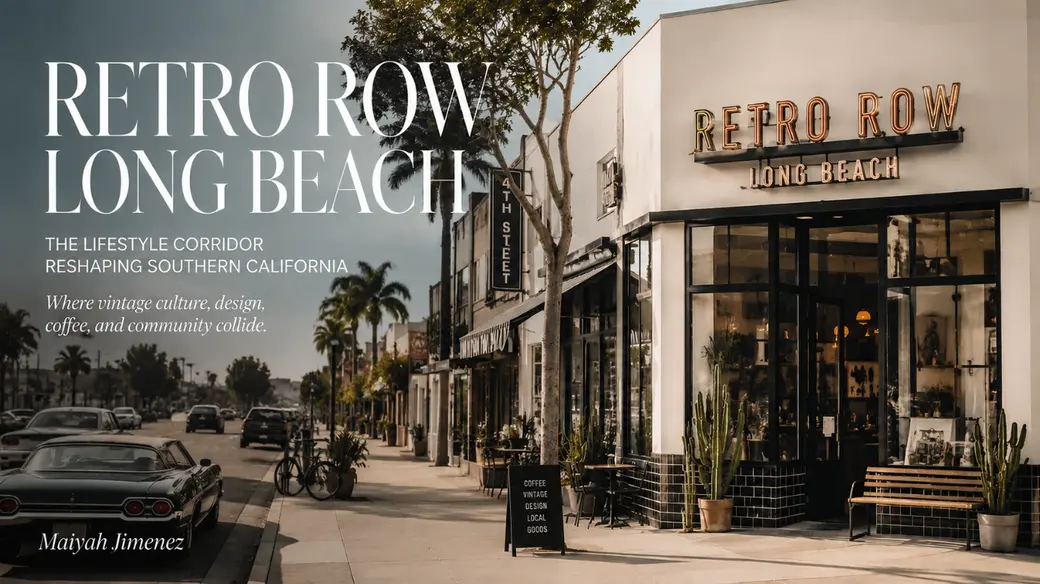
Why Retro Row Is Becoming Long Beach’s Most Stylish Lifestyle Corridor
There’s a different energy building along 4th Street in Long Beach.
Not the polished luxury of Newport Beach. Not the high-rise corporate density of Downtown Los Angeles. Something more layered. More creative. More personal.
Retro Row and the surrounding 4th Street corridor have quietly evolved into one of Southern California’s most interesting lifestyle districts — where vintage culture, independent retail, coffee shops, design aesthetics, and neighborhood identity all intersect.
And unlike many lifestyle districts that feel manufactured, Retro Row still feels authentic.
That authenticity is exactly why people are paying attention.
A Neighborhood That Feels Curated Instead of Commercial
The appeal of Retro Row isn’t just about shopping.
It’s about atmosphere.
Tree-lined streets filled with historic apartment buildings, mid-century storefronts, independent bookstores, vinyl shops, natural wine bars, boutique coffee concepts, and carefully designed interiors have transformed this part of Long Beach into a walkable destination that feels closer to Silver Lake, Brooklyn, or parts of Copenhagen than traditional suburban Southern California.
The neighborhood’s design-forward aesthetic has become part of its identity.
Large retailers haven’t overtaken the corridor. Instead, small business owners with strong branding, thoughtful interiors, and community-focused concepts are shaping the culture block by block.
That’s becoming increasingly rare in Los Angeles County.
The Rise of Experience-Driven Neighborhoods
One of the biggest lifestyle trends happening across Southern California right now is the move toward “experience-first” districts.
People want:
- walkability
- independent coffee shops
- outdoor dining
- vintage shopping
- wellness spaces
- art-driven businesses
- community events
- aesthetically designed environments
Retro Row delivers all of those things naturally.
On any given weekend, you’ll find:
- sidewalk pop-ups
- curated vintage markets
- film screenings
- art walks
- packed coffee patios
- boutique shopping crowds
- cyclists and pedestrians replacing traditional car-heavy traffic
The district feels social without feeling chaotic.
That balance is a large part of why younger buyers, creatives, remote workers, and entrepreneurs continue gravitating toward Long Beach.
Why Design Culture Matters in Real Estate
Neighborhood identity now plays a massive role in real estate demand.
People aren’t just buying square footage anymore — they’re buying proximity to culture, aesthetics, and lifestyle experiences.
Retro Row has become one of the strongest examples of that in Long Beach.
Homes near walkable lifestyle corridors often maintain stronger long-term desirability because buyers increasingly value:
- coffee shop access
- independent dining
- local events
- community atmosphere
- design-forward neighborhoods
- outdoor social culture
That shift is helping reshape parts of Long Beach from purely commuter-based communities into destination neighborhoods.
And Retro Row sits directly in the middle of that evolution.
The Businesses Defining the Corridor
Part of what makes Retro Row unique is the diversity of concepts packed into a relatively small area.
The corridor blends:
- vintage fashion boutiques
- record stores
- local bookstores
- elevated coffee shops
- cocktail bars
- wellness concepts
- art galleries
- creative studios
- independent restaurants
Businesses here aren’t competing on scale.
They’re competing on identity.
And consumers are responding to that.
In an era where many shopping districts feel interchangeable, Retro Row feels personal — which is exactly what makes it memorable.
Long Beach’s Lifestyle Renaissance
Long Beach overall is experiencing a larger cultural shift.
Over the last several years, the city has increasingly positioned itself as a creative coastal alternative to more expensive parts of Los Angeles County and Orange County.
Neighborhoods like:
- Belmont Heights
- Bluff Heights
- Alamitos Beach
- Zaferia
- Bixby Knolls
- Downtown Long Beach
- Retro Row
are all contributing to a broader identity transformation happening throughout the city.
The result is a more design-conscious, lifestyle-oriented Long Beach that’s attracting entrepreneurs, creatives, investors, and buyers looking for something more grounded and community-driven.
My Final Thoughts
Retro Row isn’t trying to become the next Melrose or Abbot Kinney.
That’s exactly why it works.
Its charm comes from remaining local, layered, and authentic while still evolving into one of the most visually compelling and culturally active districts in Southern California.
And as more people prioritize lifestyle, walkability, and neighborhood culture in where they choose to live, work, and spend time, expect 4th Street’s influence to continue growing well beyond Long Beach.
Stay Connected With What’s Happening in South LA County & Long Beach
Want weekly updates on:
- new restaurants
- lifestyle businesses
- neighborhood trends
- real estate insights
- local events
- emerging hotspots across South Los Angeles County and Long Beach?
Subscribe to the newsletter and stay connected to what’s shaping the culture and lifestyle of the region before everyone else catches on.
Categories
Recent Posts
GET MORE INFORMATION