

Costa Coffee Has More Than Triple Starbucks’ Caffeine—Could South LA County Be Its Next Market?
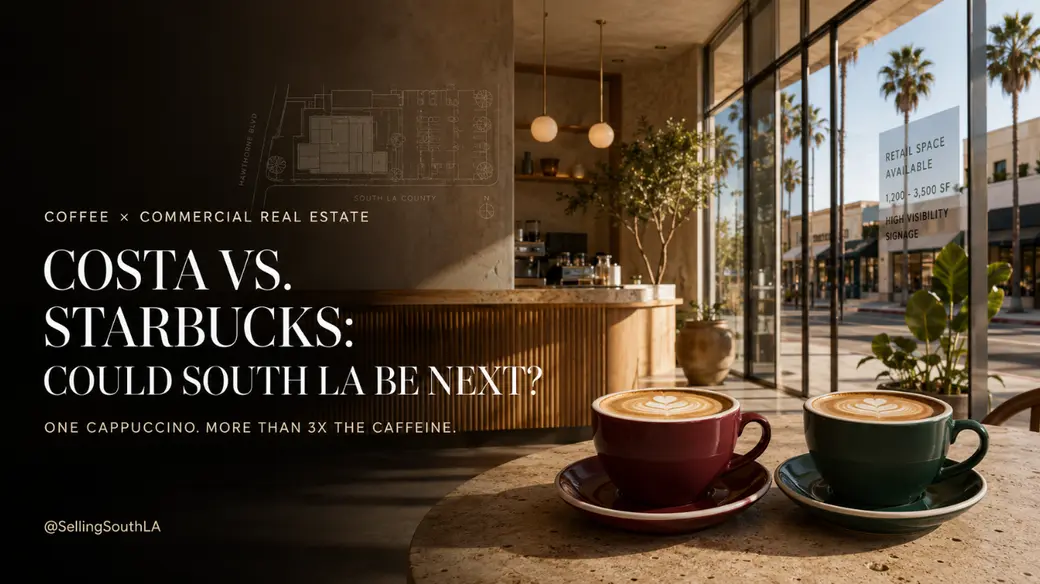
A new caffeine comparison is giving coffee drinkers—and potentially commercial real estate professionals—something to talk about.
Consumer organization Which? compared popular drinks from major United Kingdom coffee chains and found that a medium Costa Coffee cappuccino contained 325 milligrams of caffeine. A comparable Starbucks cappuccino contained 89 milligrams, meaning Costa’s drink delivered more than three times as much caffeine. The research also found significant differences across other major coffee chains.
The headline is attention-grabbing, but as a real estate broker with 12 years of experience, I immediately thought about something beyond the cup: Could Costa Coffee give Starbucks meaningful competition in South Los Angeles County?
First, What Did the Caffeine Comparison Find?
Costa’s 325-milligram cappuccino contained roughly the same caffeine as four cans of Red Bull, according to the comparison. Greggs, Caffè Nero, and Pret A Manger landed between Costa and Starbucks.
The differences may be influenced by the number of espresso shots, coffee beans, drink sizes, and brewing methods used by each company. Consumers should also remember that the comparison involved drinks sold in the United Kingdom. U.S. recipes and serving sizes may differ.
The story still highlights something important: Coffee brands are not interchangeable. Strength, flavor, convenience, pricing, atmosphere, and customer experience can all influence where consumers develop their daily routines.
For commercial property owners, developers, and leasing professionals, those routines translate into repeat visits, steady foot traffic, and the potential for a coffee tenant to anchor a neighborhood retail center.
Costa Coffee Is Already Testing the U.S. Market
Costa Coffee is not completely new to the United States, but its traditional café footprint remains limited. Its current U.S. café locations are concentrated primarily around Atlanta, with another location at Seattle-Tacoma International Airport. The company’s website encourages customers to watch for additional store announcements. View Costa Coffee’s current U.S. locations.
Costa is also taking a more flexible approach to expansion than simply opening full-size coffee shops. Its business program includes franchises, kiosks, pop-ups, brew bars, automated counters, and Smart Cafés that can serve more than 200 drink combinations around the clock.
A Costa Smart Café reportedly requires only about three square feet and can prepare a drink in under 90 seconds. Costa generally looks for host locations capable of selling at least 40 cups per day. Explore Costa’s business formats and requirements.
That flexibility is exactly why South LA County could be an interesting market.
Why South LA County Could Make Sense for Costa Coffee
South Los Angeles County is not one uniform retail market. It includes busy employment centers, college campuses, medical facilities, transit corridors, waterfront destinations, sports venues, residential neighborhoods, and rapidly changing mixed-use districts.
That variety creates several possible entry points for a brand like Costa.
Inglewood
Inglewood has become one of Southern California’s most visible entertainment and development hubs. Hollywood Park, SoFi Stadium, the Kia Forum, Intuit Dome, nearby transit connections, and continued investment have created year-round activity.
A Costa café, kiosk, or automated concept could appeal to eventgoers, employees, visitors, and residents—especially in a location that captures traffic outside major event hours.
Long Beach
Long Beach offers multiple customer bases within one city: Downtown office workers, convention visitors, port-related employment, college students, airport travelers, medical employees, tourists, and residents.
A traditional café could work in the right mixed-use district, while a Costa Smart Café might make more sense inside a hospital, hotel, university building, transportation hub, or large office property.
Carson
Carson’s proximity to the 405 and 110 freeways, California State University, Dominguez Hills, industrial employment, healthcare facilities, and major retail corridors could support a convenience-focused coffee format.
A compact location near a campus, employment center, or heavily traveled retail node might allow Costa to test demand without committing immediately to an expensive stand-alone building.
Torrance
Torrance combines major employers, healthcare facilities, shopping destinations, hotels, industrial businesses, and established residential neighborhoods. Its daytime population and commuter activity could make it a strong candidate for a café, office-based coffee concept, or automated location.
Gardena and Hawthorne
Gardena and Hawthorne offer density, freeway access, local employment, diverse communities, and active neighborhood retail corridors. These markets could suit smaller-footprint concepts that prioritize convenience, takeout orders, and repeat neighborhood customers.
Compton and South Los Angeles
Compton and South Los Angeles continue to attract new investment, but successful retail development must be responsive to local residents—not simply placed into the community without understanding it.
The right concept would need accessible pricing, local hiring, thoughtful site selection, and genuine community engagement. A highly visible national or international tenant can bring investment and foot traffic, but it should complement—not displace—the independent coffee businesses already serving these neighborhoods.
What Commercial Real Estate Professionals Should Consider
A trending product story can generate brand recognition, but caffeine alone does not make a successful location. Before pursuing a coffee tenant, owners and brokers should evaluate:
- Morning and daytime traffic patterns
- Residential and employee density
- Parking and drive-thru feasibility
- Pedestrian activity and transit access
- Visibility from major streets
- Nearby schools, hospitals, offices, and hotels
- Water, electrical, plumbing, and ventilation capacity
- Tenant-improvement costs
- Existing coffee competition
- Lease structure and tenant credit
- Whether the concept will strengthen the overall tenant mix
A second-generation café may reduce construction costs, but it still requires careful review. An automated Smart Café could fit into a much smaller space, yet its success would depend on reliable daily traffic and a host property that serves the right customers.
Competition Can Be Good—If the Site Strategy Is Right
Starbucks remains a powerful commercial real estate tenant because customers understand the brand, landlords value its credit, and the company knows how to select high-traffic locations.
But competition creates choices. Costa could bring a different flavor profile, international recognition, flexible store formats, and a stronger-caffeine reputation to the market. It could also encourage existing operators to improve their products, spaces, and customer experience.
Still, I would not want South LA County’s coffee landscape to become a collection of identical chains. Some of the region’s best coffee experiences come from independent businesses such as South LA Café, Harun Coffee, Hilltop Coffee + Kitchen, Sip & Sonder, Corridor Flow, and many others.
The best retail ecosystem includes both recognizable brands and locally owned businesses that reflect the neighborhood.
Could Costa Coffee Work Here?
My answer is yes—but the smartest introduction may not be a traditional drive-thru across the street from Starbucks.
Costa’s first South LA County opportunity could be a Smart Café inside a hospital, university, hotel, office building, airport facility, or major mixed-use development. A successful small-format pilot could establish brand awareness before the company commits to larger cafés.
The caffeine comparison may be what brought Costa into the conversation, but its flexible business model is what makes the commercial real estate story worth watching.
As South LA County continues to grow, the question is not only which businesses will arrive next. It is whether those businesses will choose locations, formats, and partnerships that genuinely serve the surrounding community.
If you own commercial property, are considering purchasing an investment property, or want to understand how new retail development could affect your neighborhood, I’m always happy to help you evaluate the local market.
Subscribe to the weekly newsletter for more updates on real estate, new businesses, development, and lifestyle trends throughout South Los Angeles County and Long Beach.
Categories
Recent Posts


GET MORE INFORMATION