

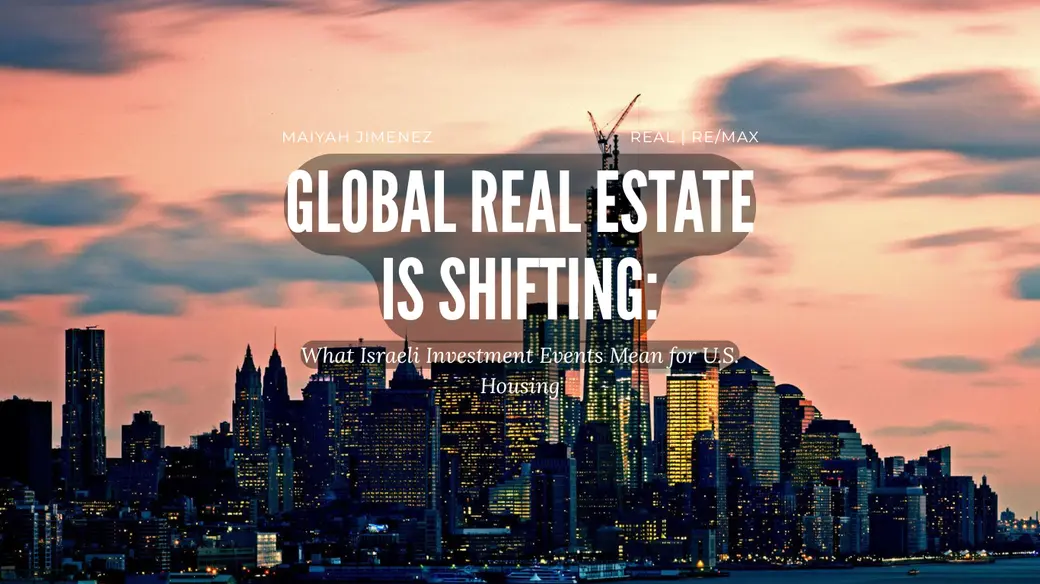
Israeli Real Estate Events Are Becoming a Global Real Estate Flashpoint — What It Means for U.S. Housing, Investors, and International Real Estate
As a real estate broker, one thing I’ve learned over the last 12 years is this: real estate never operates in a vacuum. Politics, economics, migration, global conflicts, interest rates, and investor sentiment all eventually show up in the housing market.
One of the most talked-about international real estate topics right now is the growing visibility of Israeli real estate investment events happening across major U.S. cities and internationally. The topic has become increasingly controversial because some events involve properties tied to disputed territories and broader geopolitical tensions surrounding Israel and Palestine.
For real estate professionals, investors, and everyday homeowners, this conversation goes far beyond politics. It raises larger questions about international capital flows, foreign investment in U.S. housing, global luxury markets, and what the future of cross-border real estate could look like in America.
And whether people agree or disagree politically, the reality is this conversation is now affecting how people think about international real estate.
Why Israeli Real Estate Events Are Suddenly Trending
Events like the “Great Israeli Real Estate Event” have gained significant media attention in cities like New York, Los Angeles, Toronto, and London. These expos market residential and investment opportunities in Israel to international buyers and diaspora communities.
Supporters see these events as:
- A way to encourage global investment
- A connection to cultural and religious identity
- An opportunity for international portfolio diversification
- A long-term investment strategy tied to land ownership and development
Critics argue that:
- Some promoted developments involve disputed territories
- International law concerns remain unresolved
- These events can intensify political tensions locally
- Housing and land become intertwined with broader humanitarian debates
The result is that real estate itself has become part of a larger geopolitical conversation.
For agents and brokers, this matters because global politics increasingly impacts where international money flows.
What This Means for the US Real Estate Market
Historically, periods of geopolitical uncertainty often push global investors toward stable real estate markets — especially the United States.
That’s not unique to Israeli investors. We’ve seen similar patterns from Chinese, Russian, Middle Eastern, Canadian, and Latin American investors over the last two decades.
The U.S. remains attractive because of:
- Strong property rights
- Relative economic stability
- Liquidity in major metro markets
- Long-term appreciation potential
- Global demand for dollar-backed assets
According to recent global real estate outlook reports, international investors still view the U.S. as one of the safest environments for capital preservation despite growing geopolitical uncertainty.
That could create several ripple effects.
Potential Pros for the U.S. Market
1. Increased Luxury Market Activity
Global instability often pushes wealth into “safe haven” cities like:
- Los Angeles
- Miami
- New York
- Orange County
- South Florida
- Dallas
- Scottsdale
Luxury housing and trophy commercial assets typically benefit first when international capital becomes more defensive.
For agents in high-end markets, this could mean:
- More foreign buyer activity
- Increased cash transactions
- Greater demand for wealth-preservation assets
- Stronger luxury condo and multifamily demand
2. More Cross-Border Commercial Investment
International groups continue to look at:
- Industrial properties
- Data centers
- Multifamily housing
- Logistics
- Hospitality assets
Global commercial real estate activity actually increased in 2025 despite geopolitical uncertainty.
That’s important because institutional investors increasingly view U.S. real estate as a hedge against volatility elsewhere.
3. Greater International Collaboration
Real estate is becoming more global every year.
International conferences and expos are creating stronger networks between:
- Developers
- Brokers
- Investors
- PropTech companies
- Wealth managers
- International lenders
That opens opportunities for U.S. brokers who understand:
- International transactions
- Cross-border financing
- Foreign buyer tax implications
- EB-5 and investor visa conversations
- Currency and exchange-rate sensitivity
The agents who adapt early may gain a serious advantage.
Potential Risks and Concerns
At the same time, there are legitimate concerns that shouldn’t be ignored.
1. Housing Affordability Pressure
One criticism of large-scale international investment is that it can contribute to rising prices in already expensive markets.
Research on previous foreign investment waves — particularly from China — showed concentrated international demand can increase pricing pressure in specific ZIP codes and luxury markets.
For local buyers, especially first-time homeowners, this becomes frustrating when:
- Cash buyers dominate
- Homes become investment vehicles instead of residences
- Inventory remains tight
- Luxury capital spills into mid-tier neighborhoods
This is already a concern in parts of California, New York, Vancouver, Miami, and London.
2. Greater Regulatory Scrutiny
As geopolitical tensions rise globally, governments may increase oversight of foreign ownership and cross-border transactions.
That could include:
- Foreign ownership restrictions
- Increased disclosure requirements
- Expanded anti-money-laundering regulations
- Additional taxes on foreign buyers
- Tighter reporting standards for commercial acquisitions
Real estate professionals should expect international compliance conversations to become more common over the next decade.
3. Volatility From Global Conflict
Geopolitical instability can also impact:
- Mortgage rates
- Oil prices
- Inflation
- Construction costs
- Insurance pricing
- Investor confidence
Some analysts already warn prolonged Middle East conflict could create inflationary pressure that affects real estate valuations globally.
That means even agents working locally in markets like Long Beach, South Los Angeles, or Orange County are not insulated from global events anymore.
What This Could Mean for the Future of International Real Estate in America
I think we’re entering a new phase where international real estate becomes far more politically visible.
For years, foreign investment mostly stayed in the background. Now, people are paying attention to:
- Who owns property
- Where money is coming from
- How global conflict influences housing
- Whether housing should function as a global asset class
That conversation is only getting louder.
At the same time, the U.S. will likely remain one of the world’s top destinations for international capital because of its size, stability, and long-term growth potential.
So moving forward, I expect to see:
- More international partnerships
- More scrutiny around foreign investment
- Higher demand for transparency
- Growth in luxury and commercial cross-border deals
- Increased importance of globally connected agents and brokers
The real estate professionals who understand both local neighborhoods and global economics are probably going to be the most valuable advisors in the next decade.
My Final Thoughts
Whether someone views these Israeli real estate events positively or critically, one thing is clear: international real estate is no longer a niche topic.
Global politics now directly influence:
- Housing demand
- Investor behavior
- Commercial real estate
- Luxury property trends
- Development pipelines
- Capital movement
As brokers, investors, and homeowners, we have to pay attention to how international events shape local markets.
Because today’s global headlines often become tomorrow’s housing trends.
And in 2026, the intersection of geopolitics and real estate may be one of the biggest stories in the industry.
Categories
Recent Posts






GET MORE INFORMATION